HELMETS / ARTICLE
Stop Motorcycle Helmet Fogging Up
See Better, Ride Better: An In-depth Guide on Visor Anti Fog and Helmet Fogging Prevention
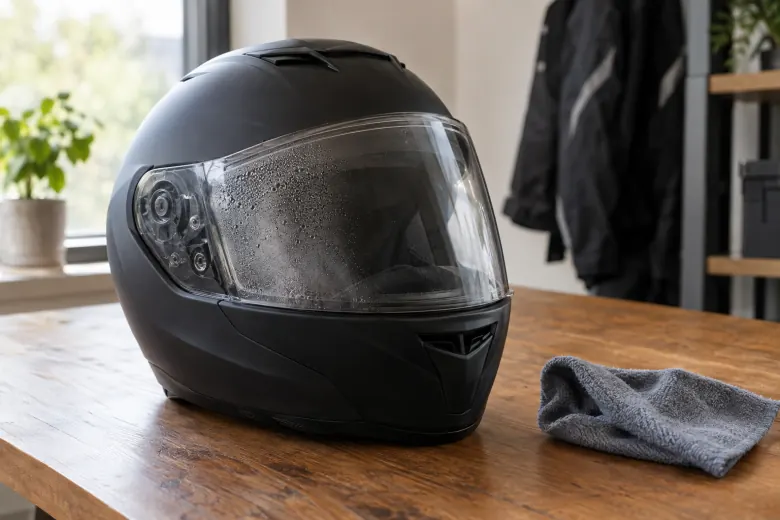
Start with the care instructions for your exact helmet visor and any separate anti-fog insert. A Pinlock insert, a coated inner visor and an outer visor can require different treatment. If fog obscures your view, stop somewhere safe before inspecting or cleaning the visor. No insert or spray guarantees clear vision in every condition.
Source review: 13 October 2026. This guide uses manufacturer instructions; it is not a hands-on test of the linked anti-fog product. Its exact formulation and compatibility with your visor have not been verified.
The Science Behind Helmet Fogging Up
 Fog forms when moisture condenses on a cooler visor. Breath and limited airflow can contribute, but first establish which surface is affected: the outer visor, its inside surface, a separate insert or your glasses. Cleaning or treating one surface will not necessarily solve fog on another.
Immediate Measures to Prevent Visor Fogging
- Use the helmet’s ventilation as instructed. Open the appropriate vents and use only visor ventilation positions allowed by the helmet manual. An improvised prop or a generic instruction to ride with the visor open is not a substitute for that guidance.
- Check compatible breath-management parts. Follow the helmet maker’s instructions for its breath deflector. Do not add a mask or alter helmet fit on the assumption that it will cure fogging.
Visor Anti Fog Technology

Different products work in different ways. Some coatings spread moisture across a surface; a Pinlock insert uses moisture-absorbing material and a sealed air gap. An aftermarket spray is not automatically suitable for either a factory coating or a Pinlock insert. Apply a treatment only when the instructions for the exact surface and treatment permit it. Pinlock support explains insert installation and care.
Affiliate disclosure: We may earn a commission if you buy through these links, at no extra cost to you. How our links work.
XpertRider partners with retailers like Amazon. We may earn a commission if you purchase through our links at no extra cost to you.
Long-Term Solutions to Prevent Visor Fogging
| Prevention Method | What to check |
|---|---|
| Pinlock Visor Insert | Match the insert to the exact visor. Check the seal and follow the instructions for that visor’s pin system. |
| Proper Ventilation | Use the helmet’s specified vents and visor positions; stop if visibility remains impaired. |
| Anti-Fog Coating or Spray | Confirm that both manufacturers permit it on the particular surface, including any existing coating. |
| Breath Deflector | Use a compatible part fitted according to the helmet manual. |
Pinlock insert: cleaning and seal checks
Pinlock’s current lens-maintenance manual, v1.3, checked on 13 October 2026, calls for removing the insert carefully, rinsing with mineral water only and gently using a clean wet microfiber cloth for remaining marks. It excludes abrasive cleaners and liquids containing alcohol or ammonia. Let the insert and visor dry naturally upright before reassembly. The silicone seal faces the inside of the visor and must contact it all the way around when checked in natural light.
If the seal has a gap, consult the instructions for your exact pins; Pinlock notes that several helmet makers use their own pin systems. Do not copy a pin-adjustment method from a different visor. If the insert is wet, allow it to dry as instructed before refitting rather than adding spray or soap. This is maintenance guidance, not a promise that an insert cannot fog.
Helmet visor: follow its own surface instructions
For SHOEI shields/visors covered by its Safety Instructions, the maker specifies diluted mild neutral detergent, a fresh-water rinse and a soft cloth for drying. It excludes glass cleaner, organic solvents and other listed cleaners, and water hotter than 40°C. That instruction does not authorize detergent on a separate Pinlock insert or on every other maker’s coating. Use the manual for the exact visor, finish and region.
Do not use generic Rain-X or leave dish soap on a visor as an anti-fog treatment based on this guide. A small patch test does not establish optical or coating compatibility. If instructions conflict or the surface is uncertain, obtain model-specific guidance from the manufacturer before applying a product.
If fogging persists, check the insert’s fit, seal and condition against its manual. Replace a scratched or hazy visor as the helmet manufacturer directs. Choose any replacement visor or helmet for correct fit and compatibility; a new helmet alone does not guarantee a fog-free view.
Published
Explore more helmets
KEEP EXPLORING