ACCESSORIES / ARTICLE
Motorcycle Battery Maintainer vs. Trickle Charger
Choose a motorcycle battery charger by chemistry, voltage and current. Learn how automatic maintainers differ from continuous trickle charging.
An automatic maintainer may suit your parked motorcycle if the battery maker approves it. A continuous trickle charger keeps supplying charge after the battery is full and can overcharge it, even at low current. Yuasa’s technical manual explains the distinction.
Research scope: Manufacturer guidance reviewed on 11 October 2026. This is a compatibility guide, with no hands-on charger testing or live retailer verification. The named charger below illustrates its manufacturer’s instructions; it is not a recommendation for every motorcycle battery.
Trickle charger or automatic maintainer?
The term “trickle charger” is often used loosely. Check what the exact model does when charging finishes:
- Continuous trickle charging: supplies a small ongoing charge. Follow the specified charging limit and disconnect as instructed; do not treat it as indefinite storage maintenance.
- Automatic maintenance: changes to a controlled maintenance stage, such as float or monitored pulses. Yuasa describes these separately from continuous trickle charging in its technical manual.
An automatic mode reduces the need to manage the charging cycle manually. It does not establish compatibility or guarantee that overcharging and other faults cannot occur.
Compatibility checklist: start with your battery
Read the battery label, its current instructions and the motorcycle manual before choosing a charger. Then compare them with the manual for the exact charger model and regional version. If a required detail is missing, ask the manufacturer before connecting it.
| Check | What must agree |
|---|---|
| Exact battery | Record its maker, full model and generation. Identify any battery management system (BMS) requirements. |
| Chemistry | Confirm flooded lead-acid, AGM, gel, LiFePO4 or the actual specified lithium chemistry. “Sealed” or “lithium” alone is insufficient. |
| Voltage | Match the battery’s nominal voltage to an explicitly supported charger mode. Do not select a mode from the motorcycle’s size. |
| Capacity and current | Find actual amp-hour capacity, the battery’s permitted charging current and the charger’s output in that mode. Check the charger’s capacity range too. |
| Charging profile | Compare permitted charging voltage, temperature limits and any restrictions on repair, desulfation or recovery stages. |
| Intended use | Confirm whether the combination permits charging only or connected storage maintenance, and follow its monitoring requirements. |
NOCO explicitly requires checking the battery maker’s charging rates, voltage and chemistry before using the GENIUS10. Shorai’s FAQ also distinguishes actual lithium Ah capacity from older lead-acid-equivalent ratings; do not substitute an equivalent rating for actual capacity.
Flooded, AGM and gel are lead-acid; lithium is different
- Flooded lead-acid: follow its electrolyte and ventilation requirements as well as charging instructions. Yuasa’s maintenance guide separates conventional batteries from sealed AGM batteries.
- AGM: use a profile approved for that battery. Yuasa says its activated AGM batteries must remain sealed and must not have water added. “Maintenance-free” does not mean they never need their charge checked.
- Gel: this is another lead-acid construction, as shown by Exide’s motorcycle GEL range. Confirm explicit gel support; do not assume an AGM setting applies. For example, NOCO assigns gel and AGM to different GENIUS10 modes.
- Lithium: establish the actual chemistry and battery requirements. Shorai’s batteries use LiFePO4, but its instructions are specific to its products. Its charging guidance rejects inappropriate lithium-chemistry chargers and lead-acid chargers with automatic repair or desulfation modes that cannot be disabled.
What an exact charger manual tells you
The NOCO GENIUS10 support page lists a 10 A charging output and a charging capacity limit of 230 Ah. Its 12V mode covers wet/flooded and gel lead-acid batteries; 12V AGM is separate. Its 12V Lithium mode covers lithium-ion batteries, including LiFePO4, and requires a BMS. Confirm the battery maker approves the charging profile.
These specifications do not establish that a small motorcycle battery accepts 10 A. Confirm the battery’s permitted current first. Nor does having a lithium mode establish compatibility with every lithium battery. This example is based on NOCO’s documentation, without confirming any retailer listing, price or availability.
Repair and recovery modes need separate approval
A repair mode is not routine maintenance. The GENIUS10 manual restricts 12V Repair to lead-acid batteries and requires battery disconnection from vehicle electronics because of its elevated charging voltage. Do not transfer those instructions to lithium batteries or another charger.
If a charger refuses to detect a battery, seek model-specific guidance rather than overriding its protections. A refusal does not establish that the battery can be recovered.
Lithium storage: model and generation matter
Shorai’s current FAQ says LFM batteries have a BMS, while LFX identification may require label or lot information and manufacturer assistance. Do not assume every LFX has the same protection.
Shorai also says not to use the BMS01 charger’s STORE mode with its batteries that have an internal BMS. Its advice for suitable automatic lead-acid chargers is periodic charging followed by disconnection, rather than leaving them attached for storage. These are Shorai-specific restrictions, not rules for all lithium batteries.
Temperature matters too: Shorai’s charging instructions prohibit charging its batteries below freezing, 0°C (32°F). Check your own battery’s charging limits; a charger’s operating-temperature range does not establish the battery’s permitted charging range.
How long can you leave the charger connected?
There is no universal number of hours, days or weeks. Use the charging and maintenance instructions for the exact combination. Continuous trickle charging needs its specified stopping point; automatic maintenance requires explicit battery approval too.
Connected maintenance also does not mean unattended charging. The GENIUS10 manual says not to leave it unattended during use. Follow monitoring and inspection requirements even when a charger has automatic controls. Occasional rest breaks are not a substitute for a compatible charging profile.
Connection and storage guidance
Whether a battery can remain installed depends on both the motorcycle and charger instructions. Follow them for the approved connection point, connector, polarity and connection/disconnection sequence. If they conflict or the correct connection is unclear, use a qualified technician. The GENIUS10 manual includes separate procedures for installed and removed batteries.
Yuasa’s technical manual calls for switching off or unplugging the charger before connecting or removing leads, ventilation, protection from sparks and eye protection. Inspect the battery, cables and charger before use. NOCO’s manual prohibits use with damaged equipment or frozen batteries and calls for stopping use if excessive heating occurs.
For storage, Yuasa’s maintenance guide recommends fully charging its batteries with an approved charger and disconnecting vehicle cables to eliminate electrical drain. Follow the motorcycle manual for removal or disconnection. Yuasa calls for monthly checks of conventional batteries and three-monthly checks of AGM batteries, with more frequent AGM checks in hotter storage. Those intervals are not universal lithium guidance.
For related upkeep, browse our motorcycle maintenance guides. Keep your exact battery instructions at hand: a maintainer can help manage charge during storage, but cannot guarantee battery life or repair an underlying fault.
Published
Explore more accessories
KEEP EXPLORING
More for your next ride
Accessories Gear review
Best Motorcycle Phone Mounts in 2026
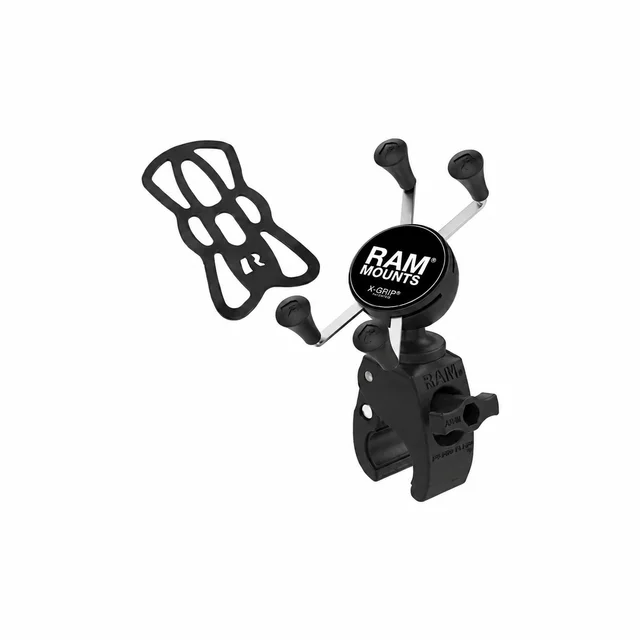
Compare RAM X-Grip and Quad Lock motorcycle mounting systems. Check phone and handlebar compatibility, mounting tradeoffs and vibration guidance before buying.
Read review